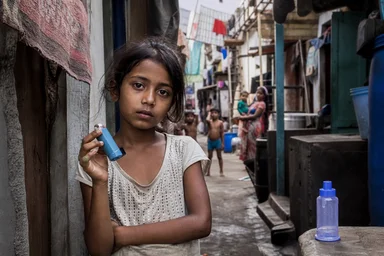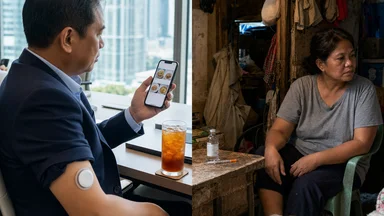
A pregnant woman, whom we will call Fatmata to protect her privacy, is 24 years old and lives in a village two hours from Moyamba town in southern Sierra Leone. She is in her seventh month of pregnancy—her first—and she has not yet seen a health worker. The nearest clinic with a nurse midwife is a long walk, then a shared taxi ride that costs 50,000 leones, roughly US$4. That is more than her household earns in a week. Her mother lost a baby to postpartum hemorrhage fifteen years ago, and Fatmata fears the same fate. She knows about the nurse-midwife clinic in Moyamba, but transport money is scarce, and the rainy season has turned the dirt road to mud.
A Mother in Moyamba Waits for Care
Fatmata’s story is not unusual. In rural Sierra Leone, many pregnant women make their first antenatal visit late—often in the third trimester—or not at all. The World Health Organization recommends at least eight antenatal contacts (WHO, 2016), but in Moyamba District, the average is fewer than three. Fatmata’s husband, a subsistence farmer, does not see the clinic as a priority. “He says if the baby is strong, it will come fine,” she explains through a translator. “But I remember my mother’s bleeding. I don’t want to die like that.”
Her village has a traditional birth attendant, an older woman who has delivered babies for decades with no formal training. Many women in the community rely on her because she is free and close by. But when complications arise—prolonged labor, hemorrhage, eclampsia—she has no drugs or equipment. Fatmata knows this. She has heard that the nurse midwives at the Moyamba Community Health Center can manage emergencies, but getting there in time is another matter.
In the dry season, the journey takes two hours by motorcycle taxi. In the rainy season, the road becomes impassable for weeks at a time. “I will try to save the money,” Fatmata says, “but if the rains come early, I will deliver here, with the old woman.” Her voice is flat, resigned. She is one of thousands of women in Sierra Leone who face a daily calculus of risk and cost.
Nurse Midwives Fill the Gap in Rural Sierra Leone
Across Sierra Leone, nurse midwives attend roughly 80 percent of rural births, a proportion that has grown steadily over the past decade (Sierra Leone Demographic and Health Survey, 2019). This is a direct result of task-shifting—a strategy endorsed by the WHO since 2012—that trains non-physician clinicians to perform skills once reserved for obstetricians. The country has only about 200 obstetricians for a population of 8 million, and almost all of them work in Freetown, the capital. In Moyamba District, which has roughly 300,000 people, there are 15 nurse midwives.
These nurse midwives are registered nurses with an additional 18 months of midwifery training, covering emergency obstetric care, neonatal resuscitation, and management of complications. They can administer oxytocin for postpartum hemorrhage, magnesium sulfate for eclampsia, and perform manual vacuum aspiration. The task-shifting model has been adopted in many low-income countries, but Sierra Leone’s version is notable for its scale and its integration into the public health system. The government, with support from organizations like Partners In Health, has invested in training and deployment. Yet the ratio of midwives to women of reproductive age remains far below the WHO-recommended threshold. The gap is felt most acutely in remote villages where a single midwife may cover several health posts.
“We are stretched thin,” says Mariatu, a nurse midwife in Moyamba who has been in practice for eight years. “On a busy day, I see 20 to 30 pregnant women in antenatal clinic, and I am also on call for deliveries at night. Sometimes I don’t sleep for 36 hours.” She speaks without self-pity. “But if I am not here, who will deliver these babies?”
Trained to Handle Hemorrhage and Eclampsia
The training that nurse midwives receive is designed to address the leading causes of maternal death: hemorrhage, infection, eclampsia, and obstructed labor. Sierra Leone’s maternal mortality ratio is estimated at 443 deaths per 100,000 live births (WHO, 2020)—among the highest in the world. Neonatal mortality stands at 31 per 1,000 live births (UNICEF, 2021). Many of these deaths are preventable with timely, skilled care.
One key program is Helping Babies Breathe, a WHO-endorsed neonatal resuscitation protocol that has been shown to reduce early neonatal death by roughly 30 percent (Niermeyer et al., 2019). Nurse midwives in Moyamba are trained to use it, along with a bag-valve-mask device. “The first minute after birth is critical,” explains Mohamed, a clinical mentor who supervises midwives in the district. “If the baby is not breathing, we have a window of about one minute to act. Our midwives can do that.”
For postpartum hemorrhage, the protocol includes active management of the third stage of labor—administering oxytocin immediately after birth, controlled cord traction, and uterine massage. If bleeding continues, midwives can perform manual vacuum aspiration or place a balloon tamponade. They also carry misoprostol tablets for use when oxytocin is not available.
Eclampsia, a hypertensive disorder of pregnancy, is managed with magnesium sulfate. Nurse midwives are trained to recognize warning signs—severe headache, visual disturbances, epigastric pain—and to administer the loading dose before arranging transfer to a district hospital. The partograph, a simple chart that tracks labor progression, is used to detect prolonged labor early. “The partograph is our best tool,” Mariatu says. “It tells us when to refer. Without it, we would lose more women to obstructed labor.”
In addition to these skills, nurse midwives are trained in infection prevention, including hand hygiene and sterilization of equipment. They also provide counseling on family planning and postpartum care. A study in Moyamba found that women who delivered with a nurse midwife were more likely to receive postnatal checkups and contraceptive advice (Kamara et al., 2022).
Barriers That Keep Women Away
Despite the availability of skilled care, many women still deliver at home. The reasons are complex. Cost is the most immediate barrier: the clinic fee of 50,000 leones, though modest by international standards, is prohibitive for families living on less than US$2 a day. The government introduced a Free Health Care Initiative in 2010 that exempts pregnant women and lactating mothers from fees, but implementation has been uneven. Some clinics still charge for drugs or supplies, and unofficial payments are common.
Distance is another obstacle. In the rainy season, roads become impassable, and even motorcycle taxis cannot reach some villages. A woman in labor may have to be carried on a hammock for hours to reach a road. By the time she arrives at a clinic, complications may have become irreversible. “We see women who have been in labor for two days,” says Mariatu. “By then, the baby is often dead, and the mother is septic. It is heartbreaking.”
Cultural preferences also play a role. Traditional birth attendants are trusted members of the community, and many women prefer to deliver at home surrounded by family. Husbands often control household spending and may not prioritize maternal health. “Men say, ‘My mother delivered all her children at home, why can’t you?’” Fatmata explains. “They don’t understand that things have changed. They don’t know about the medicines we can get.”
Lack of awareness about the Free Health Care Initiative compounds these barriers. A survey conducted in Moyamba in 2023 found that only about half of pregnant women knew that antenatal care and delivery were supposed to be free. Many believed they would be charged and stayed away. Health education campaigns are underway, but progress is slow.
Another barrier is the fear of cesarean sections. In some communities, there is a stigma associated with surgical delivery, and women may delay seeking care until it is too late. Nurse midwives work to dispel these myths by explaining the benefits of timely intervention.
A Mobile Clinic Brings Care to the Doorstep
To reach women like Fatmata, the Ministry of Health, with support from Partners In Health, launched a mobile clinic pilot in Moyamba District in 2023. Teams of nurse midwives on motorcycles travel to remote villages once a month, providing antenatal screening, iron and folic acid supplements, and tetanus toxoid vaccinations. They register pregnant women for facility delivery and distribute insecticide-treated bed nets to prevent malaria.
The mobile teams also carry misoprostol for postpartum hemorrhage prevention and chlorhexidine for umbilical cord care. In the first year of the pilot, facility deliveries in the catchment area increased by roughly 30 percent. “The mobile clinic builds trust,” says Amara, a community health officer who coordinates the program. “When women see us come to their village month after month, they start to believe that we care. They become more willing to travel to the clinic for delivery.”
The program is not without challenges. Fuel costs are high, and motorcycles break down on rough roads. Security can be an issue in remote areas. And the mobile teams can only provide a limited set of services—they cannot manage emergencies or perform cesarean sections. For complicated cases, referral to a district hospital is still necessary. But even that referral is easier when the woman has already been seen by a midwife she knows.
Fatmata was registered by a mobile team in her village last month. She received iron tablets and a bed net. The midwife told her to come to the clinic in Moyamba for delivery, and promised that the fee would be waived. “I will try to go,” Fatmata says. “But if I cannot, I know the midwife will come back next month. That gives me some hope.”
Mobile clinics have also been used to provide family planning services. In 2024, the program expanded to include depot medroxyprogesterone acetate injections and condoms, helping women space their pregnancies and reduce maternal mortality.
Data Shows Progress but Persistent Gaps
National data show real gains. Skilled birth attendance in Sierra Leone rose from 42 percent in 2008 to roughly 60 percent in 2019, according to the Demographic and Health Survey. The maternal mortality ratio declined from an estimated 1,165 per 100,000 in 2013 to 443 in 2020, though the decline has slowed in recent years. Neonatal mortality has also fallen, from 39 to 31 per 1,000 live births over the same period.
Yet the pace of improvement is not enough to meet the WHO target of 90 percent skilled birth attendance by 2030. At current rates, Sierra Leone will fall short by a wide margin. The gap is widest in rural areas, where the proportion of facility births is still below 50 percent in some districts. “We are making progress, but it is fragile,” says Dr. Bangura, a maternal health specialist at the Ministry of Health. “One bad rainy season, one outbreak of Ebola or COVID, and the gains can be reversed.”
Funding is a persistent constraint. Sierra Leone spends roughly US$40 per capita on health, far below the US$86 recommended by the WHO for low-income countries. Donor funding, which covers a large share of maternal health programs, is unpredictable. The mobile clinic pilot, for example, is funded by a grant that expires at the end of 2026. Without renewed support, the teams may stop running.
Data collection itself is a challenge. Many births occur at home and are not registered, so official figures likely underestimate the true number of maternal and neonatal deaths. Verbal autopsy—interviewing family members after a death—is used to estimate causes, but it is imprecise. “We know our numbers are incomplete,” Dr. Bangura admits. “But we work with what we have.”
In 2023, a study by the University of Sierra Leone found that maternal mortality in rural areas may be 50 percent higher than official estimates, highlighting the need for better surveillance (Conteh et al., 2023).
Strengthening the Midwifery Pipeline
To sustain and expand the gains, Sierra Leone needs more nurse midwives. The current estimate is that the country needs an additional 2,500 to meet the WHO-recommended density of 6 per 1,000 live births. Training schools in Bo and Makeni have doubled their enrollment in the past five years, but the pipeline is slow. “It takes three years to train a nurse midwife from scratch,” explains Professor Kallon, who directs the midwifery program at the University of Sierra Leone. “And then we have to retain them. Many leave for better-paying jobs abroad.”
Retention is a major problem. Rural postings lack housing, electricity, and running water. Salaries are low—a nurse midwife earns roughly US$200 per month—and promotion opportunities are limited. The government has introduced incentives, including housing allowances and salary top-ups for those serving in remote areas, but the impact has been modest. “I love my work,” Mariatu says, “but sometimes I think about leaving. My children need school fees. My mother is sick. It is hard.”
Mentorship programs aim to support new midwives. Experienced clinicians like Mohamed visit rural health centers every few months to provide on-site coaching and troubleshoot difficult cases. They also lead refresher trainings on emergency skills. “The mentorship helps with confidence,” Mohamed says. “A new midwife who has done a simulation of postpartum hemorrhage in training may freeze when it happens in real life. We walk her through it, and next time she is ready.”
Community recognition also plays a role. In some villages, nurse midwives are celebrated as heroes. “When I walk through the market, women call out to me, ‘Thank you for saving my baby,’” Mariatu says. “That is what keeps me going. That and knowing that every baby I deliver is one less mother who might die.”
International partnerships have also helped. The Sierra Leone Midwifery Association, with support from the United Nations Population Fund, has launched a scholarship program for midwives from rural areas, with the condition that they return to serve in their home districts for at least five years.
Fatmata is due in two months. She has saved 30,000 leones so far, not quite enough for the taxi. She is hoping the mobile team will come to her village again before the baby arrives. “If they come, I will ask them to take me back with them,” she says. “I want my baby to be born in a clean place, with someone who knows what to do if something goes wrong.” She pauses. “I want to be alive to see my child grow.”