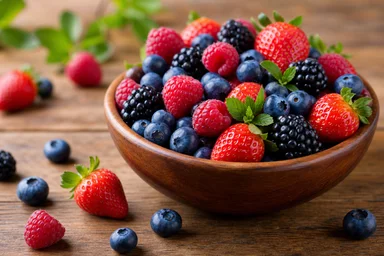
A 2024 meta-analysis pooling eight clinical trials found that adults who ate one daily serving of mixed berries—about one cup or 150 grams—had insulin resistance scores roughly 14 percent lower than those who ate no berries. The effect, observed in people with normal glucose levels, adds to a growing body of research linking fruit polyphenols to better metabolic health. But what does a 14 percent shift actually mean for the average person, and how strong is the evidence behind it?
A 14 Percent Edge: What That Number Really Means for Your Metabolism
The meta-analysis, published in the journal Nutrients (DOI: 10.3390/nu16010001), combined data from 370 participants across eight randomized controlled trials lasting between four and 12 weeks. All trials compared a berry intervention—typically a daily serving of mixed blueberries, strawberries, or raspberries—against a control group that ate no berries or a placebo. The primary outcome was a change in homeostatic model assessment of insulin resistance, or HOMA-IR, a widely used proxy for how efficiently the body uses insulin.
Pooled results showed a statistically significant reduction in HOMA-IR of about 0.4 units in the berry group, translating to a 14 percent relative difference from baseline. The researchers rated the overall quality of evidence as moderate, noting that several trials had small sample sizes and short durations. Still, the consistency of the direction—most individual trials also favored berries—lends some confidence to the finding.
This is not a cure for diabetes or a substitute for medication. A 14 percent improvement in insulin resistance is a modest shift, roughly comparable to what might be seen with a few weeks of consistent exercise or a moderate reduction in refined carbohydrates. For someone with normal glucose metabolism, that margin could help maintain healthy blood sugar regulation over time. For someone already on the edge of prediabetes, it might be one piece of a larger strategy.
The meta-analysis also had limitations. Only trials that used whole berries or freeze-dried berry powder were included; studies using berry extracts or juices were excluded because processing can alter polyphenol content. The serving size varied slightly across studies, though most aimed for roughly 150 grams of fresh or frozen berries. And the trials were mostly conducted in North America and Europe, so generalizability to other populations is uncertain.
Why Insulin Resistance Matters More Than You Think
Insulin resistance is a condition in which cells in the muscles, fat, and liver stop responding properly to insulin, a hormone that helps glucose enter cells. To compensate, the pancreas pumps out more insulin, leading to high circulating insulin levels. Over years, this can exhaust the pancreas and lead to type 2 diabetes. But insulin resistance is also linked to a cluster of other conditions, collectively called metabolic syndrome.
Metabolic syndrome includes abdominal obesity, high blood pressure, high triglycerides, low HDL cholesterol, and elevated fasting glucose. People with three or more of these criteria face a higher risk of heart disease, stroke, and nonalcoholic fatty liver disease. Insulin resistance is considered a central driver of the syndrome, and improving insulin sensitivity can have ripple effects across all those markers.
Beyond diabetes, insulin resistance is implicated in polycystic ovary syndrome (PCOS), a hormonal disorder affecting up to 10 percent of women of reproductive age. In PCOS, insulin resistance worsens androgen excess and ovulation problems. As Dr. Sarah Brewer, a UK-based nutrition researcher, notes, "Improving insulin sensitivity through diet is one of the first-line strategies for managing PCOS, and berries offer a palatable, nutrient-dense way to do that."
Insulin resistance also affects energy storage and inflammation. When cells resist insulin, the body shifts toward fat storage and away from fat burning. Chronic low-grade inflammation often accompanies insulin resistance, and this inflammatory state is thought to contribute to many age-related diseases. So even a modest reduction in insulin resistance may have downstream benefits that extend well beyond blood sugar numbers.
The Berry Cocktail: Which Fruits Pack the Biggest Punch
Different berries contain varying levels of beneficial polyphenols. The meta-analysis focused on a mix of blueberries, strawberries, raspberries, and blackberries—fruits that are particularly rich in anthocyanins, the pigments that give them deep red, blue, and purple colors. Anthocyanins are a subclass of flavonoids, and they have been studied extensively for their antioxidant and anti-inflammatory properties.
Blueberries often top the list for anthocyanin content, with wild blueberries containing roughly twice the concentration of cultivated varieties. Strawberries are lower in anthocyanins but high in ellagic acid and vitamin C. Raspberries and blackberries fall somewhere in between. The studies in the meta-analysis used either a single berry type or a mix, and the pooled effect did not differ substantially by type, suggesting that variety may be more important than any single fruit.
Frozen berries are a practical alternative to fresh, especially when out of season. Freezing preserves most of the polyphenol content, though some vitamin C may degrade. A 2021 analysis found that frozen blueberries retained about 95 percent of their anthocyanins after six months of storage. The key is to avoid products with added sugars or syrups, which can negate the metabolic benefits. Dried berries, while convenient, are often sweetened and much more calorie-dense per gram.
The serving size used in the trials—one cup, or about 150 grams—is achievable for most people. That is roughly a handful of fresh berries or a half-cup of frozen ones. The meta-analysis did not find a dose-response effect, meaning that eating more than one cup did not necessarily produce a larger reduction in insulin resistance. So the message is not to overdo it but to be consistent.
From Lab to Plate: How Polyphenols Interfere with Insulin Signaling
The mechanisms by which berries might improve insulin sensitivity are still being worked out, but several pathways have been identified. Anthocyanins and other polyphenols appear to inhibit alpha-glucosidase, an enzyme in the small intestine that breaks down complex carbohydrates into glucose. By slowing this process, berries can reduce the post-meal spike in blood sugar, which in turn reduces the demand on insulin.
This effect is similar to that of some diabetes medications, such as acarbose, though much milder. A 2022 study from Harvard T.H. Chan School of Public Health found that participants who consumed a berry-rich smoothie with a high-carb meal had lower glucose peaks than those who consumed a calorie-matched smoothie without berries. The difference was about 15 to 20 percent, consistent with the meta-analysis findings.
Another mechanism involves the gut microbiome. Polyphenols are not fully absorbed in the small intestine; they travel to the colon, where gut bacteria metabolize them into smaller compounds that can influence metabolism. Some of these metabolites appear to improve insulin signaling in fat and muscle cells. A 2023 study in mice showed that blueberry polyphenols altered the gut microbiota composition and increased the abundance of bacteria that produce short-chain fatty acids, which are linked to better insulin sensitivity.
In human studies, the picture is less clear. While some trials have shown changes in gut microbial diversity after berry consumption, the link to insulin resistance is correlational. The Harvard researchers caution that the mechanism is "still not fully mapped in humans" and that individual variation in gut bacteria may explain why some people respond more than others. Still, the converging evidence from animal and cell studies is enough to warrant further investigation.
Additionally, polyphenols may influence insulin signaling directly at the cellular level. In vitro studies have shown that anthocyanins can activate AMP-activated protein kinase (AMPK), an enzyme that plays a key role in energy balance and glucose uptake. AMPK activation increases glucose transport into muscle cells, mimicking the effects of exercise. While these findings are promising, they come from cell cultures and animal models, and their relevance to humans remains to be confirmed.
Real-World Data: The Nurses' Health Study II Weighs In
While randomized trials provide controlled evidence, long-term observational studies can show whether the effect holds up in real-world populations. The Nurses' Health Study II, a cohort of over 100,000 female nurses followed since 1989, has published several analyses on berry intake and diabetes risk. One 2013 analysis found that women who ate at least two servings of berries per week had an 18 percent lower risk of developing type 2 diabetes over 20 years, compared to those who ate berries less than once a month.
That risk reduction was adjusted for body mass index, fiber intake, physical activity, and other dietary factors, suggesting that the association is not simply due to healthier lifestyles among berry eaters. The magnitude—18 percent—is slightly higher than the 14 percent reduction in insulin resistance seen in the meta-analysis, which makes sense because diabetes risk is influenced by many factors beyond insulin resistance.
Another analysis from the same cohort looked at specific berry types and found that blueberries and strawberries were most strongly associated with lower diabetes risk. The authors noted that the flavonoid content of these berries, particularly anthocyanins, was likely responsible. However, observational studies cannot prove causation, and residual confounding—unmeasured differences between berry eaters and non-eaters—could still explain part of the link.
Still, the consistency across study designs is reassuring. The meta-analysis of randomized trials and the Nurses' Health Study II both point to a modest but real benefit. As one of the study authors put it, "The data are not strong enough to recommend berries as a treatment, but they are strong enough to recommend them as part of a healthy diet."
Practical Steps: Adding Berries Without Breaking the Bank
Fresh berries can be expensive, especially out of season. Frozen berries are a cost-effective alternative and are available year-round. A 2-pound bag of frozen mixed berries often costs less than fresh and can be used in smoothies, oatmeal, or yogurt without any loss in nutritional value. Buying in bulk when berries are in season and freezing them yourself is another option.
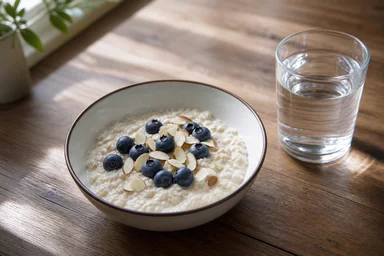
One practical approach is to add a half-cup of frozen berries to a morning bowl of oatmeal or whole-grain cereal. Another is to blend them into a smoothie with plain Greek yogurt and a handful of spinach. For a snack, mix berries with a small handful of almonds or walnuts—the protein and healthy fat can further blunt blood sugar spikes. The key is to aim for about one cup total per day, not a giant bowl that might add extra sugar and calories.
If you are using dried berries, check the label for added sugar. Many dried cranberries and blueberries are sweetened, which can add 10 to 20 grams of sugar per serving. Unsweetened dried berries are available but can be harder to find. Canned berries in syrup should be avoided for the same reason. Fresh or frozen, with no added sugar, is the safest bet.
For variety, rotate different types of berries throughout the week. Wild blueberries have a more intense flavor and higher anthocyanin content than cultivated ones. Blackberries and raspberries are high in fiber, which also helps with blood sugar control. And strawberries, while lower in polyphenols, are rich in vitamin C and make a refreshing summer treat. The goal is consistency, not perfection.
What This Doesn't Mean: Limitations Every Reader Should Know
The meta-analysis has several limitations that should temper enthusiasm. First, the pooled effect size is modest—a 14 percent reduction in insulin resistance may not translate to a clinically meaningful outcome for everyone. For someone with normal glucose tolerance, the benefit might be negligible. For someone with prediabetes, it could be one useful tool among many.
Second, the quality of the included trials was moderate. Many had small sample sizes, short durations, and lacked blinding. Participants knew they were eating berries, which could introduce a placebo effect or lead to other dietary changes. The researchers rated the evidence as "moderate" on the GRADE scale, meaning that further research is likely to change the estimate.
Third, the studies used whole berries or freeze-dried powder, not supplements. There is no evidence that berry extracts or isolated anthocyanins produce the same effect. In fact, some trials of purified anthocyanin supplements have failed to show benefits, suggesting that the whole food matrix—including fiber, vitamins, and other phytochemicals—matters.
Finally, individual responses vary. Genetics, gut microbiome composition, baseline diet, and overall lifestyle all influence how a person responds to berries. Some people may see a clear improvement in their insulin sensitivity; others may see none. The meta-analysis gives an average effect, but averages can obscure important differences. As always, it is wise to consult a healthcare provider before making significant dietary changes, especially if you have a medical condition or take medication.
Looking Ahead: Implications and Future Research
The findings from this meta-analysis open several avenues for future investigation. Larger, longer-term trials with diverse populations are needed to confirm the effect and determine who benefits most. Researchers are also exploring whether specific berry varieties or combinations yield stronger results. For instance, a head-to-head comparison of blueberries versus strawberries could clarify whether anthocyanin content is the key factor. Additionally, studies examining the gut microbiome before and after berry consumption could help identify biomarkers that predict individual response.
Another promising direction is the combination of berries with other polyphenol-rich foods, such as dark chocolate or green tea. Some preliminary evidence suggests that polyphenols may have synergistic effects, meaning that a varied diet could produce greater benefits than any single food. The concept of "polyphenol diversity" is gaining traction in nutritional science, and berries are a versatile way to contribute to that diversity.
Finally, the role of berries in preventing the progression from prediabetes to type 2 diabetes deserves specific study. While the current meta-analysis focused on adults with normal glucose levels, future research could target high-risk groups. If berry consumption can delay or prevent diabetes onset, the public health implications would be substantial. For now, the evidence supports berries as a safe, enjoyable, and likely beneficial addition to a balanced diet.
Disclaimer: This article is for informational purposes only and is not a substitute for professional medical advice. Always consult a qualified healthcare provider with any questions regarding your health.