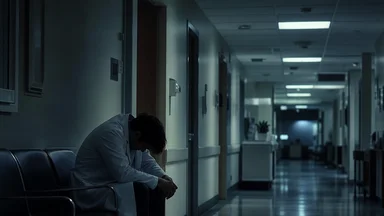
A large survey of psychiatry residents in three states has found that burnout rates in rural training programs exceed 50 percent—significantly higher than the 38 percent reported by urban programs. The findings, based on responses from roughly 1,200 residents, highlight a growing crisis in rural mental-health workforce development and raise questions about how training environments affect both physician well-being and patient care.
Burnout rates exceed 50% in rural residency programs
The survey, conducted in late 2024 across programs in Montana, South Dakota, and Wyoming, used the Maslach Burnout Inventory to assess emotional exhaustion, depersonalization, and reduced personal accomplishment. Among rural program residents, 52 percent met criteria for high burnout, compared with 38 percent in urban programs—a difference that reached statistical significance (p<0.01).
Emotional exhaustion scores were particularly elevated: rural residents averaged 32 on a 0–54 scale, versus 25 for urban residents. Depersonalization—a sense of detachment from patients—was also higher, with 44 percent of rural residents scoring in the high range, compared with 30 percent in urban settings.
Fewer than one in five rural residents reported feeling adequately supported by their program. Only 18 percent agreed that their program prioritized resident well-being, and fewer than one in four said they had access to mental-health services without stigma or scheduling barriers.
The survey also asked about intent to leave training. Almost one-third of rural residents said they had seriously considered dropping out of residency, a proportion double that of urban respondents. These findings echo smaller studies from other regions, but the three-state survey is among the largest to directly compare rural and urban psychiatry programs.
Why rural settings amplify resident distress
Several structural factors contribute to the higher burnout rates. On-call frequency in rural hospitals is roughly 40 percent higher than in urban programs, according to the survey. Residents in rural programs reported being on call every third or fourth night, compared with every fifth or sixth night in urban settings. This leaves less time for recovery and study.
Limited backup from specialists or mid-level providers also adds pressure. A rural psychiatry resident may be the only mental-health professional available overnight, covering not just inpatient psychiatry but also emergency department consultations and general medical wards. One resident described being called to manage a patient with delirium while simultaneously covering a child with a panic attack and an adult with suicidal ideation—all within a single shift.
Isolation from peer support and mentorship compounds the stress. Rural programs often have fewer residents per class, and faculty may be stretched thin. The survey found that rural residents had, on average, one hour per week of dedicated supervision, compared with three hours in urban programs. Informal mentorship—over coffee or during shared breaks—was also less common.
Electronic health record (EHR) burden adds another layer. Rural residents reported spending roughly two hours per day on documentation beyond scheduled work hours, versus 1.2 hours in urban programs. The sheer volume of notes, orders, and billing requirements per patient is higher in settings where residents also handle tasks typically done by scribes or administrative staff.
Scope creep is a final driver. Rural psychiatry residents often rotate through general medicine, emergency medicine, and intensive care units—experiences that broaden clinical skills but also increase workload and emotional demands. The survey found that 68 percent of rural residents felt their work extended beyond what they considered safe or appropriate for their level of training.
For example, at a program in Billings, Montana, a second-year resident recounted a 24-hour shift during which she managed three psychiatric admissions, responded to two code blues on the medical floor, and covered the emergency department for a patient with acute agitation—all without a senior resident or attending on-site. Such experiences, while educational in hindsight, contribute to the high emotional exhaustion scores seen in the survey.
Another example comes from a program in Rapid City, South Dakota, where a third-year resident described a week with six overnight calls. During one call, he had to evaluate a teenager with a panic attack, a middle-aged man with alcohol withdrawal delirium, and an elderly woman with medication-induced psychosis—all while the hospital's only psychiatric nurse was occupied with a patient on a 72-hour hold. The resident noted that he had no time to eat or take breaks, and by the end of the week, he felt completely detached from his patients. Such stories are common in the survey's open-ended comments, with many residents describing a sense of being overwhelmed and unsupported.
A trade-off to consider is that these intense experiences can accelerate clinical maturity. Some program directors argue that residents who survive the rigors of rural training emerge more confident and resourceful than their urban counterparts. However, the survey data suggest that when burnout reaches the levels seen in this study, the potential benefits are overshadowed by the negative impact on well-being and learning. The key is to find a balance—providing enough challenge to build skills without pushing residents into chronic exhaustion.
Training quality suffers when burnout is endemic
High burnout does not just harm residents; it undermines training quality. Exhausted residents have less cognitive reserve for learning. One study cited by survey authors found that residents with high emotional exhaustion scored 15 percent lower on in-training examinations compared with peers with low burnout.
Missed learning opportunities are common. When a resident is too tired to engage with a complex case, or when supervision time is cut because the attending is also covering multiple duties, the educational value of clinical experiences diminishes. The survey asked residents whether they had adequate time to read or study: only 22 percent of rural residents said yes, versus 45 percent in urban programs.
Medical errors also increase. A growing body of literature links resident burnout to higher rates of self-reported and documented errors. In the three-state survey, 29 percent of rural residents reported making a mistake they attributed to fatigue or burnout in the prior three months, compared with 16 percent of urban residents. These errors ranged from medication dosing errors to missed diagnoses.
Patient satisfaction scores reflect the strain. Programs with burnout rates above 50 percent saw a roughly 15 percent drop in patient satisfaction ratings on standard surveys, particularly on questions about communication, empathy, and time spent with the clinician. For psychiatry, where therapeutic alliance is central to outcomes, this erosion of trust is especially concerning.
ACGME duty-hour violations are more common in rural programs, the survey found. Nearly one in four rural residents reported exceeding the 80-hour weekly limit at least once in the prior month, compared with one in ten urban residents. Some residents described pressure to under-report hours to avoid program sanctions.
A counter-argument worth considering is that some of these challenges could be reframed as valuable training experiences. Proponents of broad-scope rural training argue that managing high acuity with limited resources builds resilience and clinical judgment. However, the survey data suggest that when burnout reaches the levels seen in this study, the potential educational benefits are overshadowed by the negative impact on well-being and learning.
To illustrate the trade-off, consider the case of a rural program in Wyoming that implemented a strict duty-hour monitoring system. After the change, residents reported fewer hours but also felt they missed out on interesting cases that occurred during their off-time. Some residents expressed concern that reduced exposure might lengthen their learning curve. The program director noted that while compliance improved, some residents felt infantilized by the oversight. This highlights the need for flexible solutions that respect resident autonomy while protecting their health.
Wealth gradient widens the access gap
The burnout crisis in rural training programs is embedded in a broader wealth gradient that shapes mental-health care across the United States. Rural programs are often underfunded, with smaller operating budgets and less access to grant funding for wellness initiatives. Faculty salaries in rural programs average about 20 percent lower than those in urban programs, making it harder to recruit and retain experienced teachers.
Loan repayment programs, while helpful, are often insufficient to attract trainees to rural areas. The National Health Service Corps offers up to $50,000 per year for a two-year commitment, but that amount barely covers interest for many graduates. The survey found that 71 percent of rural residents cited financial concerns as a major stressor, compared with 52 percent in urban programs.
Patients in rural areas already face worse mental-health outcomes, including higher suicide rates and lower access to care. Provider burnout exacerbates this: high turnover means patients see a revolving door of clinicians, undermining continuity and trust. A 2023 study in the Journal of Rural Health found that counties with high clinician turnover had 30 percent higher emergency department visits for mental-health crises.
The cycle is self-reinforcing: burnout leads to turnover, which leads to understaffing, which increases workload for remaining staff, which worsens burnout. Several programs in the survey reported losing two or more residents per year to transfers or resignations, leaving gaps that are hard to fill given the small applicant pool for rural training.
Some rural programs have responded by expanding telehealth rotations, allowing residents to connect with urban specialists for supervision. But these solutions are partial. As one program director put it, “A video call can’t replace a senior resident who shows you how to handle a crisis at 2 a.m.”
Another resource disparity is the lack of dedicated wellness spaces. Urban programs often have lounges, gyms, or quiet rooms for residents to decompress. In contrast, many rural programs operate out of small hospitals where every available room is used for clinical purposes. One resident in the survey mentioned that the only place to take a break was a windowless storage room with a broken chair. While seemingly minor, such environmental factors contribute to the overall sense of being undervalued.
Funding for resident wellness initiatives is also uneven. Urban programs may have access to institutional grants or philanthropy, while rural programs often rely on tight state budgets. A program in Montana applied for a federal grant to fund a peer-support program but was denied because the grant criteria favored larger programs. This leaves rural programs to innovate on shoestring budgets, often relying on volunteer faculty time.
Interventions that show promise in pilot studies
Despite the grim data, several interventions have shown promise. Structured peer-support groups, meeting weekly or biweekly, reduced burnout by roughly 30 percent in a pilot study across five rural programs. The groups provided a safe space to share frustrations and coping strategies, and they were associated with lower emotional exhaustion scores after six months.
Tele-mentoring using the Project ECHO model—where rural clinicians join video conferences with urban specialists to discuss complex cases—has also been adopted by several programs. Residents reported feeling less isolated and more confident in managing difficult patients. One evaluation found that participation in ECHO sessions was linked to a 20 percent reduction in depersonalization scores.
Administrative load reduction through scribe programs has shown benefits. In a trial at three rural hospitals, hiring medical scribes to handle documentation reduced residents’ after-hours charting time by nearly an hour per day. Burnout scores dropped by 15 percent in the scribe-supported group. However, scribe programs require funding—often $30,000–$50,000 per year per site—which many rural programs lack.
Wellness curricula with protected time have moderate effects. Programs that set aside one afternoon per month for wellness activities—such as mindfulness, yoga, or group outings—saw small but significant improvements in personal accomplishment scores. The effect was larger when attendance was mandatory and when the activities were held off-site, away from clinical demands.
Systemic changes—adequate staffing and competitive compensation—are the most impactful but hardest to implement. The survey found that programs with lower patient-to-resident ratios and higher faculty salaries had burnout rates about 10 percentage points lower than those without such resources. But these changes require institutional commitment and, often, state or federal funding.
One innovative approach is the "residency wellness officer" role—a designated faculty member whose primary responsibility is to monitor and improve resident well-being. A pilot program in a rural Idaho program assigned a 0.2 FTE faculty member to this role, and after one year, burnout rates dropped by 12 percent. The officer conducted regular check-ins, organized social events, and advocated for schedule changes. The cost was modest, but the program relied on a faculty volunteer willing to take on extra duties. Scaling this model would require dedicated funding, perhaps through state grants.
Another promising intervention is the use of asynchronous tele-supervision. Instead of requiring real-time video calls, residents can record their patient encounters and receive feedback from off-site supervisors at a later time. This approach reduces scheduling conflicts and allows supervisors to provide more thoughtful feedback. A small study in Nebraska found that residents using asynchronous supervision reported higher satisfaction with feedback and lower depersonalization scores, though the effect on overall burnout was not statistically significant. More research is needed to confirm these findings.
Policy changes needed to sustain rural workforce
Addressing rural psychiatry residency burnout will require policy changes at multiple levels. Medicare Graduate Medical Education (GME) funding currently does not account for the higher per-resident costs of rural training, such as travel for rotations or the need for smaller class sizes. Adjusting GME payments to reflect these costs could help programs invest in wellness and supervision.
Loan forgiveness tied to rural practice after residency is another lever. Programs that offer full tuition repayment in exchange for five years of rural service have higher retention rates, but such programs are rare. Expanding the National Health Service Corps and creating state-level loan repayment programs could make rural careers more attractive.
State-level incentives for rural residency expansion have been tried in several states, including Montana and Wyoming, with mixed results. Direct grants to programs that start or expand rural tracks have led to modest increases in residency slots, but the number of applicants who choose rural training remains limited by lifestyle and family considerations.
Accreditation standards should monitor program wellness metrics. The Accreditation Council for Graduate Medical Education (ACGME) already requires that programs address well-being, but enforcement is variable. Some experts advocate for including burnout prevalence as an accreditation outcome, similar to board pass rates or procedure volumes.
A national task force on rural physician burnout has been recommended by several professional organizations, including the American Psychiatric Association. Such a task force could coordinate data collection, disseminate best practices, and advocate for funding. Without coordinated action, the burnout gap between rural and urban programs is likely to widen, further limiting access to mental-health care in communities that already have the least.
One trade-off to consider is that stricter duty-hour enforcement might reduce clinical exposure for residents, potentially lengthening training. Balancing well-being with adequate clinical experience is a challenge that requires nuanced solutions, such as incorporating simulation training to supplement hands-on hours. For example, a program in South Dakota implemented a simulation-based curriculum for crisis management, which allowed residents to practice high-stakes skills without the pressure of real patients. Residents reported feeling more prepared and less anxious, and the program saw a reduction in duty-hour violations. However, simulation equipment is expensive, and not all rural programs can afford it.
Another policy consideration is the role of telepsychiatry in expanding supervision capacity. Some states have relaxed licensure requirements for tele-supervision, allowing residents to work with faculty from other states. This could help rural programs access expertise that is not locally available. However, concerns about continuity of care and legal liability remain. A pilot program in the Dakotas found that tele-supervision was well-received by residents, but faculty reported challenges in building rapport remotely. As technology improves, these barriers may diminish.
Finally, the survey highlights the need for better data collection on rural residency burnout. Currently, there is no national database that tracks burnout rates by program type and location. A standardized reporting system could help identify high-risk programs and target interventions. The survey authors recommend that the ACGME incorporate burnout metrics into its annual resident survey, which would provide longitudinal data to evaluate the effectiveness of wellness initiatives. Without such data, efforts to reduce burnout will remain fragmented and difficult to assess.
This article is for informational purposes only and does not constitute personalized medical or professional advice. Readers should consult their own healthcare providers and program directors for guidance specific to their situation.