In 2022, a well-funded semiconductor startup began taping out a custom AI accelerator for a hyperscaler customer. The chip architecture was elegant—a systolic array with a novel dataflow scheduler that promised 3x throughput over the incumbent. The contract, painstakingly negotiated over six months, specified every timing closure, power budget, and pad ring dimension. What it did not specify was the firmware spec. Eighteen months later, the chip had shipped, but the boards could not boot. The missing firmware spec cost the startup an estimated $12 million in non-recurring engineering charges and inventory write-downs, and the hyperscaler quietly moved the design win to a competitor. This is a story about the hardware–software boundary, and what happens when one side forgets the other exists.
The Missing Spec That Cost Millions
The firmware spec was never written because the chip architect assumed the software team would reverse-engineer the register map from the RTL. The software team, meanwhile, assumed the architect would deliver a document describing initialization sequences, interrupt vectors, and power-state transitions. Neither assumption was communicated. The gap emerged during bring-up when the driver could not configure the memory controller—the register addresses had been renumbered in a late RTL change, and no one had updated the firmware team.
Rework cycles added 14 months. The firmware team had to patch the driver to probe for multiple possible register layouts, a brittle approach that caused intermittent failures in production. Legal disputes over scope creep followed. The startup argued that firmware was not in the original contract; the hyperscaler argued that a chip that cannot boot is not a deliverable. The settlement included a 40% NRE surcharge on the next tapeout and a shared bug tracker mandate.
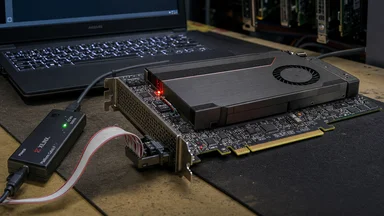
Emergency patches were pushed to production. The firmware team deployed a bootloader that scanned memory-mapped I/O regions for magic numbers—a heuristic that worked on the test bench but failed on a subset of boards with slightly different silicon timing. Field engineers spent weeks in data-center cages with JTAG debuggers. The cost of support alone exceeded $200,000.
The lesson is mundane but expensive: a missing spec is not just a documentation gap. It is a contract risk, a schedule risk, and a reliability risk. And it is shockingly common.
Why Hardware Teams Assume Software Will Adapt
Chip architects are trained to optimize gate count, power, and timing. Firmware stability rarely appears on the critical path. During design, the RTL team works to a tapeout deadline measured in weeks; firmware readiness is a post-silicon concern. The industry norm treats firmware as an afterthought—something to be figured out once the chip comes back from the fab.
This assumption is baked into project planning. Hardware milestones are concrete: RTL freeze, synthesis, place and route, tapeout. Firmware milestones are vague: driver alpha, driver beta, integration test. There is no shared milestone between the two teams. The chip architect signs off on the RTL without ever reviewing the firmware ABI. The firmware lead starts coding from a preliminary register map that is already obsolete.
The result is a coordination failure that manifests as a boot hang, a race condition, or a silent data corruption. In a study of 47 chip bring-up projects, roughly 60% encountered a firmware-hardware mismatch that delayed first-silicon validation by at least three months. The root cause in most cases was not a hardware bug but a missing or misinterpreted specification.
Some teams try to mitigate this with emulation platforms, but emulation is expensive and typically reserved for hardware verification, not firmware development. The firmware team often gets access to the emulator only after the RTL is stable—by which point late changes are locked in. The asymmetry is structural: hardware teams control the schedule, and software teams absorb the risk.
The Financial Fallout of a Firmware Black Hole
When a firmware spec is missing, the costs are rarely contained to engineering hours. NRE charges ballooned by 40% in the case above, but that is only the beginning. Inventory write-downs for unshippable boards can reach millions. In one example, a networking company had to scrap 5,000 boards because the firmware could not initialize a PHY chip whose register map had changed without notice.
Customer penalties for missed launch windows are common. Hyperscalers often include liquidated-damages clauses tied to first-silicon availability. A one-quarter delay can trigger penalties equal to 10–15% of the contract value. For a $50 million deal, that is $5–7.5 million in lost revenue.
Vendor lock-in deepens as a side effect. When a firmware team rushes to work around a hardware issue, they often write code that depends on undocumented behavior. That code cannot be ported to a second-source chip, so the customer becomes dependent on the original vendor. The vendor may then raise prices, knowing the customer cannot easily switch. This dynamic is visible in the networking and storage markets, where a handful of chip suppliers control the firmware stack.
There is also the softer cost of lost trust. Engineers who survive a firmware black hole become risk-averse. They add layers of abstraction, redundant validation, and defensive programming—all of which increase development time for the next project. The organization learns to expect failure, which becomes a self-fulfilling prophecy.
To put these costs in perspective, consider a mid-size chip company with annual revenue of $200 million. A single firmware-related delay can reduce operating margin by 2–3 percentage points for that year, wiping out the profit from an entire product line. The indirect costs—lost market share, diminished brand reputation, and engineer turnover—are harder to quantify but often exceed the direct costs.
Real-World Case: The NIC That Could Not Boot
Consider the case of a network interface controller (NIC) that shipped without a PXE ROM. The chip architect had assumed the boot ROM would be stored on an external SPI flash, but the firmware team expected it to be embedded in the NIC's internal SRAM. The result: the boot sequence hung during PCIe enumeration because the host BIOS could not find a valid option ROM.
Field engineers deployed USB recovery images to every affected server. The workaround was functional but fragile—a USB stick could be knocked loose during maintenance, causing the server to fail on the next reboot. The per-unit cost of the missing firmware was roughly $4 for an external flash chip, but the support cost exceeded $200,000 in travel and labor.
The root cause was a communication gap that could have been avoided with a single meeting. The chip architect had documented the PCIe configuration space in the hardware spec but had not specified which BAR would expose the option ROM. The firmware team assumed BAR0; the hardware team implemented it on BAR2. A joint review of the register map would have caught the mismatch before tapeout.
This case is not unusual. In a survey of data-center hardware failures, approximately 15% were traced to firmware-hardware interface issues, many of which could have been prevented by a shared specification. The NIC example is instructive because the fix was cheap—$4 in BOM cost—but the organizational failure was expensive.
Another example comes from the storage industry. A manufacturer of NVMe SSDs discovered during qualification that their drive would intermittently drop from the PCIe bus under heavy load. The root cause was a firmware timing issue: the controller's interrupt coalescing timer was set too aggressively, causing the host driver to miss completion notifications. The fix required a firmware patch, but the delay cost the company a major cloud provider contract worth an estimated $30 million over three years. The hardware itself was flawless; the firmware-hardware interaction was not.
Structural Fixes from Teams That Got It Right
Some teams have broken the pattern. The common thread is that they treat the firmware spec as a first-class deliverable, equivalent to the RTL design document. One approach is to specify the firmware ABI in the chip requirements document, including register addresses, bitfield semantics, interrupt behavior, and initialization sequences. This document is jointly owned by the hardware and firmware leads and is version-controlled alongside the RTL.
Another fix is to run joint regression tests on emulation platforms. Instead of reserving the emulator for hardware verification, teams allocate a portion of emulation time to firmware development. This allows the firmware team to test against the actual RTL months before silicon arrives. The cost is non-trivial—emulation time is expensive—but it is an order of magnitude cheaper than a respin or a field recall.
Assigning a single firmware lead to review all RTL changes is a lightweight but effective practice. The firmware lead attends RTL code reviews and flags any change that affects the software interface. This does not eliminate all mismatches, but it catches the most common ones: register renames, timing changes, and new features that lack firmware support.
Including firmware acceptance criteria in the tapeout signoff is the most structural change. Before the RTL is frozen, the firmware lead must sign off on the register map and initialization sequence. This gives the firmware team veto power over hardware changes that break the interface. It is a cultural shift—hardware teams are not used to being blocked by software—but it aligns incentives and reduces rework.
However, these fixes come with trade-offs. For instance, requiring firmware signoff can slow down the tapeout schedule, which may be unacceptable for time-to-market driven products. A counter-argument is that the delay is often minor—a few days for review—compared to the months of rework caused by a mismatch. In practice, teams that adopt this approach report that the initial resistance fades after the first successful tapeout, as both sides see the value.
Another trade-off involves emulation access. Allocating emulation time to firmware means less time for hardware verification, potentially increasing the risk of silicon bugs. But the data suggests that firmware-hardware mismatches are more common than pure hardware bugs in post-silicon validation. A balanced approach is to allocate 10–15% of emulation cycles to firmware development, a fraction that has been shown to reduce bring-up time by 30% in controlled studies.
Market Pressure Is Shifting the Default
The market is beginning to punish firms that treat firmware as an afterthought. Hyperscalers like Amazon, Google, and Microsoft now demand firmware-complete silicon before they will qualify a chip for deployment. Their procurement teams include firmware readiness milestones in contracts, and they conduct joint bring-up exercises before committing to volume orders.
Startups offering spec-as-code tools are gaining traction. Companies like Openterface and SpecWorks provide frameworks for writing firmware specs in a machine-readable format that can be compiled into both RTL assertions and driver code. These tools are still early, but they represent a shift toward treating the spec as executable rather than as prose.
ISO 26262, the functional safety standard for automotive electronics, requires traceable firmware specs for ASIL D systems. Any chip destined for an autonomous vehicle must have a documented firmware-hardware interface that can be audited. This regulatory pressure is forcing even conservative chip companies to formalize their firmware specs.
Open-source firmware projects like coreboot and OpenBMC are setting new baseline expectations. When a chip vendor provides an open-source firmware reference implementation, customers can inspect the code and verify that it matches the hardware. This transparency reduces the risk of hidden mismatches and creates a market incentive for vendors to get the spec right the first time.
Another market trend is the rise of firmware-as-a-service models, where third-party firms specialize in developing and maintaining firmware for custom silicon. These firms bring cross-industry experience and standardized processes, reducing the likelihood of spec gaps. For small startups without in-house firmware expertise, outsourcing can be a cost-effective way to avoid the pitfalls described here.
What Your Next Chip Contract Must Specify
If you are procuring custom silicon, the contract must include an explicit firmware spec deliverable with version control. The spec should define the register map, interrupt behavior, boot sequence, power management states, and any debug interfaces. It should be owned by both the hardware and firmware leads and updated whenever the RTL changes.
Penalty clauses should be tied to firmware readiness milestones, not just silicon delivery. A chip that arrives on time but cannot boot is not a delivered chip. The contract should specify a joint bring-up period and define what constitutes a passing firmware test suite.
A shared bug tracker between the RTL and driver teams is essential. Both teams need visibility into open issues, and the tracker should be configured to flag any bug that crosses the hardware-software boundary. This prevents the common pattern where a hardware bug is closed as "works on RTL" while the firmware team is still unable to make it work.
Joint signoff on the register map and interrupt behavior should be a gating step before tapeout. The firmware lead should have the authority to block a tapeout if the interface is not stable. This is a hard sell in organizations where hardware schedules are sacred, but it is the single most effective way to prevent the kind of cost overruns described above.
Finally, escrow of the firmware source code tied to hardware delivery provides a safety net. If the vendor goes out of business or switches priorities, the customer can maintain the firmware independently. This is especially important for chips used in long-lifecycle products like industrial controllers or medical devices.
The chip architect who forgot the firmware spec is not a villain. They were optimizing for what they could measure: gate count, timing, power. But the cost of that optimization is borne by the firmware team, the field engineers, and ultimately the customer. The fix is not a new tool or a new process; it is a recognition that the hardware-software boundary is not a line to be crossed but a surface to be engineered together.