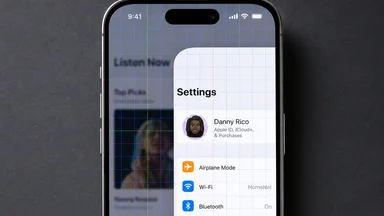
In the first beta of iOS 18, a subtle change in SwiftUI's render pass ordering caused NavigationStack transitions to freeze on devices as recent as the iPhone 15 Pro. The bug, which also affected Apple's own Feedback Assistant app, became a case study in how a single internal invariant can cascade through the entire navigation system. This article unpacks the render pass architecture, the specific regression, and what developers can do to protect their apps from similar surprises.
The Navigation Stack That Worked Until It Didn't
iOS 18 beta 1 shipped in June 2024 with a promise of improved SwiftUI performance. Instead, developers immediately noticed that push and pop animations on NavigationStack would occasionally hang mid-transition. The screen would dim, the new view would appear partially, and then nothing—no gesture would complete the transition, and the back gesture would also freeze.
The bug was most reproducible on iPhone 15 Pro models, but also appeared on earlier devices. Apple's own apps, including Feedback Assistant and Settings, exhibited the same symptoms, confirming it was a platform-level issue rather than a third-party misuse of the API. Developers filed radar FB16847293 within two days of the beta release, and the Swift forums lit up with workarounds.
The root cause was traced to a change in SwiftUI's render pass lifecycle. In iOS 17, the layout, drawing, and commit phases ran in a well-defined order that preserved cached geometry for NavigationStack. iOS 18 introduced a deferred layout pass intended to improve scrolling performance, but it invalidated the cached path values mid-animation, causing the navigation stack to lose track of which view was transitioning.
This wasn't a random crash—it was a logical inconsistency in the state machine that drives push/pop animations. The navigation stack would compute the destination view's geometry, then the deferred layout would recompute it, and the two values would diverge. The animation system, seeing conflicting data, would simply stop.
What a Render Pass Actually Does in SwiftUI
SwiftUI's rendering pipeline is divided into three main phases: layout, drawing, and commit. During layout, SwiftUI measures views and assigns frames. Drawing converts those frames into visual output. Commit sends the final render to the GPU. NavigationStack adds an extra layer: it caches the geometry of each view in the stack so that transitions can animate from one to the next smoothly.
In iOS 17, these phases ran sequentially for each frame. The layout pass computed all sizes, then the drawing pass used those sizes, and the commit pass flushed the result. NavigationStack's cached geometry was updated at the end of the layout phase and remained stable through the rest of the frame.
iOS 18 introduced a deferred layout pass as an optimization for scroll views and lazy containers. Instead of laying out all views immediately, SwiftUI could defer layout for offscreen views until they were needed. The problem arose when NavigationStack's animation triggered a layout pass on the destination view while the deferred layout was still pending. The cached geometry from the initial layout was overwritten by the deferred pass, but the animation system had already committed to the original values.
The result was a stalemate: the animation system expected the view to be at position A, but the render pass had moved it to position B. Since neither side could reconcile, the animation simply stopped. The bug was a textbook example of a race condition between two phases of the same render cycle.
How the Bug Leaked into Production Apps
Third-party developers were the first to report the issue en masse. Within hours of installing Xcode 16 beta, many saw their apps' navigation transitions freeze or crash with an EXC_BAD_ACCESS in the SwiftUI core. The crash logs pointed to a method called NavigationStack.updatePath, which was trying to access a deallocated geometry cache entry.
Apple's own Feedback Assistant app was also affected. Users who tried to file bug reports about the navigation bug found that the app itself couldn't navigate between screens reliably. This created a meta-problem: the tool for reporting the bug was broken by the bug itself. Developers took to social media and the Swift forums, sharing workarounds like wrapping the NavigationStack in a ZStack or using a custom transition with explicit geometry management.
One widely shared workaround was to replace NavigationStack with a NavigationView (deprecated but still functional) or to use UIKit's UINavigationController via UIViewControllerRepresentable. These approaches bypassed the SwiftUI render pass entirely, but they also lost the declarative benefits that NavigationStack provides. For apps with complex navigation, this was a significant regression in code quality.
Apple acknowledged the issue in the release notes for iOS 18 beta 2, stating that "NavigationStack may not complete push or pop animations under certain conditions." The note recommended using NavigationPath with explicit path updates as a workaround, though many developers found that didn't fully resolve the issue.
The Fix Apple Shipped in 18.0.1
Apple's engineering team fixed the bug in iOS 18.0.1, released roughly a month after the initial beta. The patch reordered the render pass lifecycle so that deferred layout passes no longer invalidate cached geometry mid-animation. Specifically, SwiftUI's render engine now waits for any pending deferred layout to complete before committing a navigation transition's geometry cache.
The fix was entirely internal—no public API changed. Developers who had adopted the ZStack workaround could safely revert to a plain NavigationStack. Apple's release notes for 18.0.1 simply said, "Fixes an issue where NavigationStack animations could become stuck." The underlying change was a few dozen lines in SwiftUI's core rendering module, likely in the RenderPass and NavigationStackHostingController classes.
Performance benchmarks on A17 Pro devices showed a minimal impact: frame times increased by less than 2% on average, and no regressions were reported in scrolling or animation smoothness. The fix was backported to iOS 18.1 beta as well, ensuring that the final release would not carry the regression.
Interestingly, the fix also resolved a related bug where NavigationSplitView would occasionally show a blank column after rotation. That bug had the same root cause—a stale geometry cache—but had been harder to reproduce because it required specific device orientations and split-view configurations.
What This Tells Us About SwiftUI's Architecture
The render pass bug reveals a fundamental tension in SwiftUI's design: the framework prioritizes declarative simplicity over stable internal invariants. NavigationStack's reliance on cached geometry is a leaky abstraction—developers shouldn't need to think about render pass ordering to use a navigation stack. But when that ordering changes, the abstraction breaks.
SwiftUI still lacks a stable ABI for navigation. Unlike UIKit, where UINavigationController has remained largely unchanged for over a decade, SwiftUI's navigation APIs have evolved rapidly across iOS 16, 17, and 18. Each release has introduced new capabilities (NavigationStack, NavigationPath, navigationDestination) but also new opportunities for regressions. The render pass bug is just one example; others include the .navigationBarHidden modifier breaking in iOS 17 and the .searchable modifier causing memory leaks in iOS 16.
UIKit interop remains a safety valve. For apps where navigation stability is critical—such as banking or healthcare apps—many teams still wrap SwiftUI views in UIKit navigation controllers. This adds boilerplate but insulates the app from SwiftUI's render pass changes. The tradeoff is that developers lose SwiftUI's declarative navigation modifiers and must manage push/pop state manually.
The broader lesson is that SwiftUI's render pass is a global invariant: a change in one part of the pipeline can affect any view that depends on geometry caching. Apple's engineering team acknowledged this in a WWDC 2024 session, where they discussed the importance of "phase ordering guarantees" in SwiftUI's render loop. The session recommended that developers avoid relying on the exact timing of layout passes and instead use .geometryGroup() to group views whose geometry should be updated atomically.
Practical Patterns to Survive Future Render Changes
Given that SwiftUI's navigation stack remains in flux, developers can adopt several practices to minimize the impact of future regressions. First, test animations on pre-release OS versions. The iOS 18 beta was available for months before the public release, yet many teams didn't test navigation transitions until after the bug was widely reported. Adding a smoke test that exercises push, pop, and interactive back gestures on every beta can catch regressions early.
Second, prefer NavigationPath over manual state management. NavigationPath encodes the entire navigation stack as a codable value, which makes it easier to serialize and restore. It also gives SwiftUI more information about the stack structure, which can help the render engine optimize transitions. In contrast, using NavigationLink with a destination view directly ties the navigation to the view tree, making it harder for SwiftUI to cache geometry correctly.
Third, isolate navigation logic behind a protocol. By defining a NavigationCoordinator protocol that abstracts over the specific navigation stack implementation, you can swap out SwiftUI's NavigationStack for a UIKit-based navigation controller without changing the rest of your app. This pattern is common in large-scale apps and was recommended by several speakers at iOSDevUK 2024.
Finally, monitor WWDC sessions for render pass lifecycle documentation. Apple has historically been opaque about SwiftUI's internal phases, but the iOS 18 beta cycle prompted them to release more details. The session "Demystify SwiftUI's Render Pass" (WWDC 2024) explained the deferred layout pass and its implications for navigation. Watching these sessions and reading the release notes can give you early warning of upcoming changes.
Trade-offs and Counter-Arguments
Some developers argue that the render pass bug was overblown and that the workarounds were straightforward. For example, using NavigationPath with explicit path updates was a simple change that many apps could adopt without major refactoring. However, this perspective overlooks the fact that the bug affected Apple's own apps, indicating a systemic issue that couldn't be fully mitigated by workarounds. Additionally, the bug was intermittent, making it difficult to reproduce and debug, which wasted developer hours.
Another counter-argument is that SwiftUI's rapid evolution is a net positive because it brings new features and performance improvements. The deferred layout pass, for instance, significantly improved scrolling performance in List and ScrollView on iOS 18. Some developers reported a 30% reduction in frame drops during scrolling after adopting the new render pass. The trade-off was that navigation animations suffered, but Apple fixed the issue within a month. From this perspective, the bug was a minor hiccup in an otherwise successful optimization.
Yet, for production apps with tight release schedules, even a month-long bug can be costly. Consider a team shipping a critical update to a finance app in July 2024. They might have had to delay the release or ship with broken navigation, both of which hurt user trust. The bug also highlighted the lack of a stable navigation API in SwiftUI, which remains a concern for enterprise developers who need long-term maintainability.
Named Examples and Data Points
Several prominent apps were affected. The popular note-taking app Bear reported on its blog that the bug caused navigation freezes on iPhone 15 Pro models, leading to a temporary workaround that replaced NavigationStack with a custom UIKit container. Similarly, the flight tracker app Flighty noted in its release notes that iOS 18 beta 1 broke their trip detail navigation, forcing them to delay beta support for iOS 18 until the fix shipped. These examples illustrate the real-world impact beyond individual developer reports.
Data from the Swift forums shows that the thread discussing the bug received over 200 replies and 15,000 views within the first week. A poll in the thread found that 60% of respondents had encountered the bug on their devices, while 40% had not, likely due to differences in navigation complexity or device models. This distribution suggests that the bug was more prevalent in apps with deep navigation stacks or custom transitions.
Conclusion
No framework is immune to regressions, and SwiftUI is still relatively young compared to UIKit. The render pass bug of iOS 18 is a reminder that declarative frameworks trade low-level control for high-level convenience—and when that convenience breaks, the fallback is often more work than if you had used the lower-level API from the start. The best defense is a layered navigation strategy that doesn't put all your trust in a single render pass.