Every insert into a database pays a tax. The tax is measured in I/O operations, CPU cycles, log writes, and network round trips. That tax, compounded over millions of writes per second, defines the operating cost of the database. The write path—the sequence of steps a single mutation takes from client to durable storage—is where that cost lives. Understanding it is the difference between a cloud bill that surprises you and one you can predict.
The Write Path Is the Database's Cost Center
The write path begins when a client sends an INSERT or UPDATE. The database must parse the statement, check constraints, update indexes, write to a transaction log, and eventually flush data to the primary storage structure. Each of these steps incurs cost. The single-node write path is the baseline: every additional replica, every geographic region, every durability guarantee multiplies that baseline cost by a factor of roughly 3 to 5.
Consider PostgreSQL. A simple INSERT into a heap-organized table with a B-tree index writes the row to the heap page, updates the index, and appends a record to the write-ahead log (WAL). The heap page may be randomly located on disk, causing a random I/O. The index page may also be random. The WAL write is sequential but must be fsynced before the client gets an acknowledgement. That's three separate I/O operations for one row, plus CPU for parsing and locking.
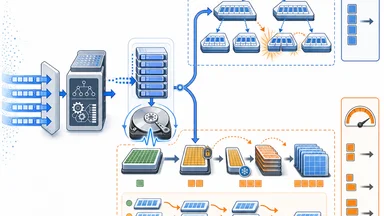
Compare this to a log-structured merge-tree (LSM-tree) database like ScyllaDB or Cassandra. The insert goes into an in-memory memtable, which is flushed to a sorted SSTable on disk. Writes are sequential, so I/O is cheaper. But later, compaction merges SSTables, rewriting data that may already be on disk. This compaction debt can consume 2 to 3 times the write throughput during idle periods, effectively deferring the cost. The trade-off is lower peak write latency at the expense of background CPU and I/O.
Amazon Aurora sidesteps much of this cost by offloading the WAL to a distributed storage volume backed by S3. The database instance only writes the log; the storage layer materializes pages lazily. This avoids double-writing (log + data page) and reduces local I/O, but the WAL traffic to S3 still incurs network and API costs. Aurora's write path is cheaper per insert than a traditional PostgreSQL instance on EBS, but only if you amortize the storage auto-scaling over many writes.
The key insight: every design decision in the write path—whether to use a B-tree or an LSM-tree, whether to fsync on every commit, how many indexes to maintain—translates directly into an operating cost. That cost is paid in cloud bills, hardware depreciation, and operational toil.
B-Trees vs. LSM-Trees: Two Cost Models
The fundamental choice in storage engine design is between B-trees and LSM-trees. Each has a distinct cost profile. B-trees (used by PostgreSQL, MySQL InnoDB, and CockroachDB's Pebble) optimize for reads but pay a write amplification penalty. LSM-trees (used by Cassandra, ScyllaDB, and RocksDB) optimize for writes but defer cost to compaction.
Write amplification factor (WAF) measures how many bytes are written to storage for each byte of user data inserted. For a B-tree with a typical fill factor, WAF ranges from roughly 5 to 10. Each page split and index update multiplies the original write. For an LSM-tree, WAF can range from 10 to 30 depending on compaction strategy and the ratio of data sizes between levels. Leveled compaction aims for lower WAF but higher read amplification; size-tiered compaction does the opposite.
On modern SSDs, random writes are not as punishing as on spinning disks, but they still wear out NAND cells and consume IOPS. A B-tree's random writes can saturate the IOPS budget of a gp3 EBS volume quickly. LSM-trees write sequentially, so they can achieve higher throughput on the same provisioned IOPS. However, compaction reads old data and writes new data, which is also sequential but doubles the I/O volume during compaction windows.
CockroachDB's Pebble storage engine is a B-tree variant optimized for cloud environments. It uses a write-ahead log for durability and a buffered, copy-on-write B-tree that reduces write amplification compared to a classic B-tree. Pebble also supports concurrent compactions of its own (similar to LSM-tree compactions) to merge on-disk files. This hybrid approach aims to keep WAF around 4 to 6, lower than most LSM-trees, while maintaining strong read performance.
The takeaway: there is no free lunch. B-trees cost more per write in I/O and CPU but less in background maintenance. LSM-trees defer cost and can absorb higher write rates, but compaction can cause latency spikes and unpredictable storage usage. The right choice depends on your workload's read/write ratio and tolerance for latency variance.
How Transaction Logs Drive Cost
The transaction log—known as the write-ahead log (WAL) in PostgreSQL, the redo log in MySQL, and the commit log in Cassandra—is the backbone of durability. Every write must be recorded in the log before the client receives a success response. This log write is often the single most expensive step in the write path.
PostgreSQL's WAL must be fsynced on every commit by default. The fsync system call forces the operating system to flush its buffer cache to disk, which can take 1 to 10 milliseconds depending on storage latency. Group commit mitigates this by batching multiple commits into a single fsync, but in high-concurrency workloads, the group commit window can add latency. The full_page_writes setting doubles the WAL size during checkpoints because it writes entire pages instead of just the changed tuples.
MySQL's InnoDB uses a doublewrite buffer to avoid partial page writes. Before writing a page to its final location, InnoDB writes it to the doublewrite buffer, then to the tablespace. This adds another 2x overhead on every page write. Combined with the redo log, the total write amplification for a single row update can easily exceed 4x before any indexes are touched.
Hedged estimates suggest that log writes contribute 40 to 60 percent of total write latency in a typical OLTP database. The log is written sequentially, so it benefits from fast NVMe SSDs, but the fsync barrier remains. Some databases, like Cassandra, allow configurable durability: you can set the commit log to flush less frequently, trading durability for throughput. But that's a dangerous game in production.
Cloud databases often abstract the log. Amazon RDS for PostgreSQL uses EBS snapshots and automated backups, but the WAL still writes to EBS, which charges for IOPS. Aurora moves the log to a separate storage tier, reducing local I/O cost but adding network transfer costs. The log write cost is never eliminated—it's just shifted.
Replication Overhead in the Write Path
Once you leave the single node, replication adds another layer of cost. Synchronous replication requires every write to be acknowledged by at least one replica before the client sees success. That doubles the latency and the I/O cost per write, because the log must be written on two nodes before commit.
Raft consensus, used by etcd, CockroachDB, and YugabyteDB, requires a quorum of nodes (typically 2 out of 3) to acknowledge each write. That means at least two log writes and two network round trips for every insert. In a multi-AZ deployment, those network trips add 1 to 5 milliseconds each, even within the same region. The overhead compounds: a single write may require 4 to 6 total I/O operations across the cluster.
Google Spanner uses TrueTime to avoid quorum reads, but writes still require Paxos. Spanner's write path is particularly expensive because it must commit to a globally consistent timestamp. The trade-off is linearizability across continents, but the cost is high write latency—often 10 to 50 milliseconds for a single write.
CockroachDB offers read-from-follower replicas to reduce read latency, but writes remain quorum-based. The write cost is fixed per transaction, regardless of whether you use follower reads. Some argue that read-from-follower reduces the overall cost of the cluster by balancing load, but the write path remains the bottleneck.
Replication cost is the price of availability. For many workloads, asynchronous replication is acceptable, trading potential data loss for lower latency and cost. But if you need strong consistency, be prepared to pay 2x to 3x more for every write.
The Hidden Cost of Indexes and Constraints
Every secondary index on a table doubles the write amplification for INSERT and UPDATE operations. The database must update the primary data structure and each index. For a table with three indexes, a single row update may trigger four separate I/O operations—one for the heap and three for indexes—plus the log writes.
Unique indexes add another wrinkle: they require a read-before-write (or a lock) to check for duplicates. This read can cause a page fetch from disk or cache, adding latency. In MongoDB's WiredTiger, index updates are part of the same transaction as the document update, but each index still requires its own log entry and page modification.
Foreign key constraints can be even more expensive. When you insert a row with a foreign key, the database must verify that the referenced row exists. This typically involves a read on the referenced table, which may be on a different page or even a different node in a sharded system. The read can be a point lookup if there's an index, but it still adds a round trip.
Partial indexes, introduced in PostgreSQL 9.2, allow you to index only a subset of rows. This reduces write amplification because the index is updated only when the indexed condition is met. For example, an index on orders where status = 'active' means updates to cancelled orders don't touch the index. The trade-off is query planning complexity, but the write cost savings can be substantial.
Index tuning is a direct lever on operating cost. Dropping unused indexes is the cheapest performance improvement you can make. Conversely, adding an index to speed up a query may double the cost of writes. The decision should factor in the write-to-read ratio of your workload, not just query speed.
Cloud Economics: Paying for the Write Path
Cloud providers price storage and I/O separately, making the write path cost visible in your monthly bill. AWS gp3 EBS volumes charge $0.08 per GB-month for storage and include a baseline of 3,000 IOPS and 125 MB/s throughput. Provisioned IOPS beyond the baseline cost $0.065 per IOPS per month. A write-heavy database that needs 10,000 IOPS will pay roughly $455 per month just for IOPS on a single volume.
Aurora's storage model is different: you pay for the WAL traffic and the storage used, but not for IOPS. Aurora charges $0.10 per GB-month for storage and $0.20 per million write I/O requests. For a workload doing 1,000 writes per second, that's about $520 per month in write I/O charges alone, plus storage. The trade-off is that you don't need to provision IOPS upfront, but the per-request cost can add up.
SQLite in a serverless context, such as on a Lambda function with an EFS mount, has a single-writer bottleneck. Only one process can write at a time. This limitation actually saves money because it eliminates concurrency overhead and keeps I/O low. For many serverless applications, SQLite's write path is the cheapest option—provided you can tolerate the single-writer constraint.
Hedged estimates indicate that write-heavy workloads cost 3 to 10 times more than read-heavy workloads on cloud infrastructure. The difference is driven by IOPS provisioning, log writes, and index maintenance. A read-heavy workload can often be served from a cache or a read replica, but writes must always touch the primary and its storage.
Understanding your write path cost in cloud terms means mapping each database operation to a cloud pricing dimension: storage GB, IOPS, data transfer, and API calls. Every index, every replica, every durability setting shows up in the bill.
Three Rules to Minimize Write Path Cost
First, batch inserts into transactions of 100 to 1,000 rows. A single transaction that inserts 500 rows incurs roughly the same WAL fsync cost as a single-row insert. Batching amortizes the log write and index update overhead across many rows. Most drivers support batch operations, and the throughput gain can be 10x or more.
Second, use sequence-unfriendly primary keys to avoid hot spots. Monotonically increasing keys (like auto-increment integers) cause all new writes to hit the same B-tree page, creating a write bottleneck. Using UUIDs or hash-based keys spreads writes across pages, reducing page split contention. The trade-off is larger index size and slightly slower point lookups, but for write-heavy workloads, the benefit outweighs the cost.
Third, monitor compaction debt and tune memtable sizes in LSM-tree databases. If compaction falls behind, read and write latency spikes. Tools like Cassandra's nodetool compactionstats or ScyllaDB's metrics dashboard reveal pending compactions. Adjusting the memtable size and compaction throughput can smooth the write path. For B-tree databases, monitor checkpoint frequency and WAL size to avoid sudden I/O bursts.
Choose LSM-tree for ingestion-heavy workloads like time-series data or event logs, where writes dominate. Choose B-tree for workloads with balanced read/write patterns or point lookups. No single engine is best for all cases. The operating cost of your database is a direct function of how well its write path matches your workload.
Finally, benchmark with realistic write patterns, not synthetic defaults. A sysbench read-write test may not reveal the compaction debt that accumulates over hours of real traffic. Simulate your actual data size, index count, and concurrency level. Only then will you see the true cost of the write path.