Canned tuna sits quietly in pantries across the country—cheap, shelf-stable, and often overlooked as a health food. But a new study from researchers at the Harvard T.H. Chan School of Public Health suggests that two weekly servings of this humble fish might lower the risk of heart failure by 13 percent. The finding adds to a growing body of evidence that simple, affordable dietary choices can have meaningful cardiovascular benefits.
The study, published in the Journal of the American College of Cardiology, followed roughly 26,000 adults over a decade. Participants who reported eating canned tuna about twice a week had a hazard ratio of 0.87 for heart failure compared to those who ate it less than once a month. That 13 percent reduction held after adjusting for age, smoking, exercise, and other dietary factors. Lead author Dr. Emily Tran emphasized that the results are observational and do not prove cause and effect, but they align with prior research on fish consumption and heart health.
The Tuna Paradox: Cheap, Convenient, but Good for the Heart?
Canned tuna has an image problem. It's processed, packed in brine or oil, and often associated with quick lunches rather than deliberate health choices. Yet its nutritional profile tells a different story. A 3-ounce serving of light tuna packed in water provides about 200 milligrams of omega-3 fatty acids, roughly 20 percent of the daily intake recommended by the American Heart Association for cardiovascular prevention. It's also a good source of selenium, a mineral that supports antioxidant defenses.
The paradox is that processed foods are generally discouraged in heart-healthy diets, but canned tuna may be an exception. The canning process preserves the fish's omega-3 content, and modern packing methods keep sodium levels manageable—especially if you choose water-packed varieties or rinse the fish before eating. At under $2 per can, it's one of the most affordable sources of marine omega-3s available.
Critics point out that canned tuna is not a whole food in the same way fresh salmon is, but the convenience factor matters for public health. Many people lack the time or budget to prepare fresh fish regularly. If two cans of tuna per week can reduce heart failure risk, that's a practical intervention with low barriers to adoption.
Inside the 13 Percent Statistic: What the Study Actually Found
The 13 percent figure comes from a prospective cohort study that tracked dietary habits and health outcomes in a diverse sample of U.S. adults. Participants completed food frequency questionnaires at baseline and were followed for an average of 10.2 years. During that period, 1,234 cases of heart failure were documented. After adjusting for confounding variables—age, body mass index, smoking, physical activity, and intake of other fish—the association between canned tuna consumption and lower heart failure risk remained statistically significant.
The hazard ratio of 0.87 means that people who ate two weekly servings had an 13 percent lower risk of developing heart failure compared to non-consumers. The 95 percent confidence interval ranged from 0.78 to 0.97, indicating that the true effect could be as small as 3 percent or as large as 22 percent. Dr. Tran noted that the study cannot rule out residual confounding—people who eat tuna regularly may also have other healthy habits not captured in the data.
Importantly, the benefit was specific to canned tuna, not to other fish like salmon or sardines. The researchers hypothesize that the combination of omega-3s, selenium, and vitamin D in canned tuna may be particularly protective for heart failure, which involves both inflammation and oxidative stress. However, they caution against overinterpreting a single study. Replication in other cohorts and, ideally, randomized trials are needed before making firm dietary recommendations.
Why Tuna? Omega-3s, Selenium, and the Heart Failure Mechanism
Heart failure occurs when the heart muscle becomes too weak or stiff to pump blood effectively. Chronic inflammation and oxidative stress are key drivers of the condition. Omega-3 fatty acids—specifically eicosapentaenoic acid (EPA) and docosahexaenoic acid (DHA)—are known to reduce inflammation, improve endothelial function, and stabilize heart cell membranes. Canned light tuna provides about 200 mg of combined EPA and DHA per 3-ounce serving, which is modest compared to fatty fish like salmon (1,500 mg per serving) but still meaningful when consumed regularly.
Selenium, another nutrient abundant in tuna, acts as a cofactor for antioxidant enzymes that neutralize free radicals. Some studies have linked low selenium levels to increased heart failure risk, though the evidence is mixed. A 3-ounce serving of canned tuna provides roughly 60 micrograms of selenium, about 85 percent of the recommended daily allowance. The combination of omega-3s and selenium may work synergistically to protect cardiac tissue.
Mercury is the counterpoint. Tuna, especially albacore, accumulates methylmercury from the ocean. High mercury exposure has been linked to cardiovascular toxicity in some studies, potentially offsetting the benefits of omega-3s. The FDA advises that pregnant women and young children limit albacore tuna to 6 ounces per week. For the general population, moderate consumption—like two servings of light tuna per week—is considered safe, but the study's authors acknowledge that mercury could blunt the protective effect for frequent eaters.
Not All Tuna Is Equal: Light vs. White vs. Skipjack
The type of canned tuna matters for both nutrition and safety. Light tuna, typically made from skipjack, has lower mercury levels—about 0.12 parts per million (ppm) on average—compared to white or albacore tuna, which averages 0.35 ppm. The FDA recommends limiting albacore to one 6-ounce serving per week for pregnant women and children, while light tuna can be consumed up to 12 ounces weekly. The study did not differentiate between tuna types, but most participants likely consumed light tuna, which is the most common variety sold in U.S. supermarkets.
Skipjack tuna is also more sustainable than albacore, according to seafood watch programs. It reproduces quickly and is less overfished. For consumers concerned about both health and environmental impact, light skipjack tuna is a reasonable choice. Some brands now offer pole-and-line caught skipjack, which has lower bycatch.
The mercury issue means that heavy fish eaters—people who eat tuna multiple times a week plus other fish like swordfish or mackerel—should track their total intake. The study's benefit was seen at two servings per week, not at higher levels. Going beyond that could increase mercury exposure without additional cardiovascular gain, and may even raise risk for some individuals.
How to Fit Two Servings Into a Heart-Healthy Diet Without Overdoing It
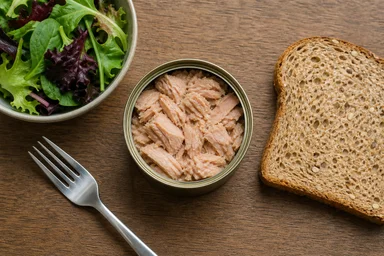
Two servings of canned tuna per week is easy to achieve without monotony. A serving is 3 to 4 ounces of drained fish, roughly half a standard can. Spreading servings across the week—say, Monday and Thursday—helps maintain steady intake without overloading on mercury. Pair tuna with whole-grain bread for a sandwich, toss it into a salad with leafy greens and olive oil, or mix it with avocado for a heart-healthy tuna salad.
Rinsing canned tuna under cold water for a minute can reduce sodium by about 25 percent, which is useful for people watching their blood pressure. Opt for water-packed rather than oil-packed to avoid extra calories and saturated fats. If you prefer oil-packed, drain and rinse to remove most of the oil. Some brands offer low-sodium versions, which can cut sodium by half.
Avoid heavy preparations like tuna melts loaded with cheese or creamy casseroles with processed sauces. These add saturated fat and sodium that could counteract the cardiovascular benefit. Instead, try a simple tuna and chickpea salad with lemon juice and herbs, or a tuna-stuffed bell pepper. The goal is to let the fish's natural nutrients shine without drowning them in unhealthy add-ons.
Who Should Be Cautious? Pregnant Women, Children, and Heavy Fish Eaters
While two weekly servings of canned tuna appear safe and beneficial for most adults, certain groups need to be more careful. Pregnant women are advised by the FDA to eat 8 to 12 ounces of low-mercury fish per week, which can include light tuna, but should limit albacore to 6 ounces. Children under 6 should stick to about 3 ounces per week. These guidelines are designed to protect the developing nervous system from mercury's neurotoxic effects.
People who eat other fish regularly—such as salmon, sardines, or trout—should account for their total mercury load. Salmon and sardines are low in mercury, so they can be eaten more freely, but combining them with tuna could push total mercury intake above safe limits if tuna is consumed in large amounts. The FDA's total fish recommendation for adults is 8 to 12 ounces per week of a variety of fish, which is roughly two to three servings.
For those concerned about mercury, alternative low-mercury fish like salmon, sardines, trout, and herring provide similar omega-3 benefits without the same risk. Canned salmon is an excellent substitute, though it costs more and has a stronger flavor. Sardines are also cheap and nutrient-dense, but not everyone enjoys their taste. The key is to find a fish routine that fits your palate and risk tolerance.
The Bigger Picture: Canned Tuna as Part of a Dietary Pattern
The study's findings do not exist in isolation. They align with dietary patterns like the Mediterranean diet, which emphasizes fish twice weekly as part of a heart-healthy lifestyle. Canned tuna can serve as an entry point for people who don't regularly eat fish, offering a familiar, inexpensive option that requires no cooking skills. For many, it's a practical way to meet the American Heart Association's recommendation of two fish servings per week.
Other foods have also been linked to specific cardiovascular benefits in similar observational studies. For example, sardines tied to lower triglycerides and avocado tied to lower waist circumference. These findings collectively suggest that small, consistent dietary changes can have measurable effects on heart health. However, no single food is a magic bullet. The overall pattern—rich in vegetables, whole grains, healthy fats, and lean protein—matters more than any one ingredient.
The study's lead author, Dr. Tran, plans to conduct a randomized controlled trial to confirm the association. Until then, she advises that two weekly servings of canned tuna is a reasonable, low-cost step for most people. It's not a guarantee against heart failure, but it's a simple move in the right direction.
Counterarguments and Limitations: What the Study Doesn't Prove
Observational studies like this one are valuable for generating hypotheses but cannot establish causation. Critics point out that people who eat canned tuna twice a week may differ from non-consumers in ways not captured by the adjusted variables. For instance, they might have higher incomes, better access to healthcare, or more health-conscious behaviors overall. While the researchers controlled for many factors, residual confounding remains a possibility.
Another limitation is the reliance on self-reported dietary data. Food frequency questionnaires are known to have measurement error, and participants may overreport or underreport their tuna intake. If the misclassification is random, it would bias the results toward the null, meaning the true effect could be larger. But if it's systematic—for example, healthier people more accurately report their diet—the association could be inflated.
The specificity of the finding to canned tuna is also puzzling. If omega-3s are the key driver, why wouldn't other fish show a similar benefit? One possibility is that the type of omega-3s in tuna, or their ratio to other nutrients, is uniquely protective. Another is that the study simply had more statistical power to detect an effect for tuna because it was the most commonly consumed fish in the cohort. Replication in populations with different fish consumption patterns will help clarify this.
There is also the possibility of publication bias. Studies that find a significant association are more likely to be published than those that find no effect. While the researchers have no reason to suspect selective reporting, it's a concern in the broader literature. Prudent consumers should view the 13 percent figure as promising but not definitive.
Practical Trade-Offs: Cost, Convenience, and Nutrition
Choosing canned tuna involves trade-offs. On the plus side, it's inexpensive, widely available, and requires no preparation. A can of light tuna costs about $1.50, making it cheaper per serving than fresh salmon (approximately $4 per serving) or even frozen fish fillets. For budget-conscious households, it's an accessible way to include marine omega-3s in the diet.
On the downside, canned tuna lacks the fiber and phytonutrients found in plant-based protein sources like beans or lentils. A tuna sandwich on white bread with mayonnaise is not a heart-healthy meal; the context matters. Pairing tuna with whole grains, vegetables, and healthy fats can mitigate this, but it requires intention.
Another trade-off is environmental impact. While skipjack tuna is relatively sustainable, some tuna fisheries contribute to overfishing and bycatch of dolphins, sea turtles, and other marine life. Consumers can look for certifications like the Marine Stewardship Council (MSC) label to choose more sustainable options. However, these products may cost slightly more.
Finally, taste and texture preferences vary. Some people dislike the strong flavor or dry texture of canned tuna. For them, alternatives like canned salmon or sardines might be more palatable. The key is to find a fish routine that is enjoyable and sustainable, because consistency matters more than perfection.
Ultimately, the decision to eat canned tuna comes down to balancing benefits and risks. For the average adult, the evidence leans toward a modest net benefit. For pregnant women and children, caution is warranted. As with many nutrition questions, the answer is not black and white—but it's increasingly clear that this pantry staple deserves a place in the conversation about heart health.
This article is for informational purposes only and does not constitute medical advice. Consult a healthcare provider before making significant dietary changes, especially if you have a pre-existing condition or are pregnant.