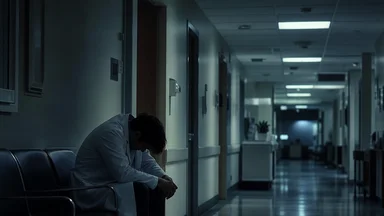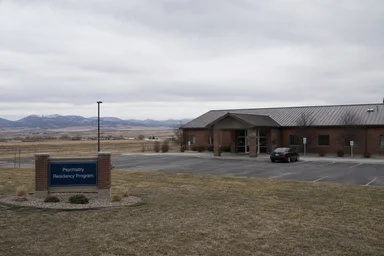
In rural America, the pipeline for new psychiatrists is leaking badly. Data from the American Association of Directors of Psychiatric Residency Training (AADPRT) suggest that more than 40 percent of trainees in rural psychiatry residency programs fail to complete their training. That figure is roughly three times the national dropout rate for psychiatry residents, which hovers around 15 percent. The consequences ripple outward: fewer psychiatrists to serve communities that already have the lowest provider-to-patient ratios in the country.
The Rural Residency Drain
Each year, roughly 20 to 25 rural psychiatry residency slots are vacated by trainees who leave before earning their diploma. That may sound small in absolute terms, but in many states — Montana, Wyoming, the Dakotas — a single lost psychiatrist can mean a catchment area of tens of thousands of people going without specialist care. The dropout rate in rural programs has been tracked informally for years, but a 2023 AADPRT survey put a number on it: 42 percent of rural programs reported a completion rate below 60 percent over a five-year period.
The loss compounds an existing shortage. According to the Health Resources and Services Administration (HRSA), more than 120 million Americans live in areas designated as mental health professional shortage areas. Rural counties are disproportionately affected, with roughly 65 percent of rural counties lacking a single practicing psychiatrist. Every resident who drops out represents a slot that might not be filled again for years, if ever.
Rural residency programs are smaller and more fragile. Many operate with just two to four residents per class, meaning a single departure can cripple the cohort. Programs that lose a resident often struggle to recruit a replacement mid-cycle, and some have closed entirely after consecutive years of attrition. The net effect is a slow erosion of training capacity in the very regions that need it most.
Some program directors argue that the 40 percent figure is inflated by residents who transfer to urban programs rather than leaving medicine entirely. But even a transfer represents a loss to the rural community the program was designed to serve. And the data show that only a minority of dropouts transfer; most either switch specialties or leave clinical medicine altogether.
What Drives the Attrition?
Residents who leave rural programs consistently cite isolation as the primary reason. In a 2022 survey published in Academic Psychiatry, 68 percent of rural psychiatry residents who considered dropping out reported “professional isolation” as a major factor. Unlike their urban peers, who have multiple co-residents, attending physicians on-site, and a range of subspecialty services, rural trainees often work with a skeleton crew. Night and weekend call can mean being the only physician — not just the only psychiatrist — in the hospital.
Burnout scores among rural psychiatry residents are roughly 30 percent higher than those in urban programs, according to a 2021 study using the Maslach Burnout Inventory. Heavy call burden is a consistent predictor: rural residents average one in three nights on call, compared with one in five for urban residents. With fewer backup staff, a single sick call can force a resident to work a double shift with no relief.
Limited elective time and research opportunities also contribute. Rural programs often lack the faculty to offer subspecialty rotations in child, forensic, or addiction psychiatry. Residents who want to explore these areas may need to travel or negotiate away-from-site rotations, which can be logistically and financially burdensome. Over a four-year residency, the cumulative lack of variety can erode engagement.
Another factor is supervision. Accreditation standards require a certain number of hours of direct attending oversight, but rural programs may have only one or two full-time faculty psychiatrists. When an attending is pulled into clinical duties, supervision time shrinks. Residents report feeling unsupported during complex cases, particularly when managing patients with severe illness or suicide risk. The perceived lack of a safety net feeds anxiety and, eventually, the decision to leave.
Urban Programs Offer a Contrast
At top-tier urban programs, such as the Massachusetts General Hospital/McLean Hospital residency in Boston, dropout rates fall below 10 percent. These programs benefit from large cohorts — often 12 to 16 residents per class — that provide built-in peer support. They also offer a wide array of elective rotations, subspecialty tracks, and research infrastructure. A resident interested in neuromodulation, addiction, or community psychiatry can find a mentor and a clinic within a few blocks.
Urban programs also tend to have more robust wellness curricula. Many have dedicated wellness directors, protected time for self-care, and structured mentorship programs. Funding per resident is higher, too: a 2020 analysis by the Association of American Medical Colleges found that urban programs receive roughly 1.5 times the graduate medical education (GME) funding per trainee compared with rural programs, largely because of higher Medicare reimbursement rates and institutional subsidies.
The contrast is not just about money. Urban residents have access to a wider range of patient populations and pathology, which can make training feel richer and more engaging. They also have more opportunities to network and to build a professional identity. For a resident who thrives on variety and collaboration, the rural experience can feel like a dead end.
Yet some urban programs have their own dropout problems. A 2019 study found that residents in urban safety-net hospitals — those serving predominantly low-income populations — had attrition rates approaching 25 percent, driven by similar factors of burnout and limited resources. The rural-urban gap is real, but it is not the only divide that matters.
Evidence-Based Mitigation Strategies
A handful of rural programs have begun experimenting with interventions to stem the tide. Tele-supervision, in which an attending psychiatrist at a distant site provides real-time guidance via video link, has been piloted in several states. A 2022 study in Academic Psychiatry found that programs using tele-supervision for at least half of their clinical hours reported a 20 percent reduction in dropout intentions among residents.
Structured peer groups, also conducted via video platforms, have shown promise. Residents in a Nebraska program that instituted weekly virtual case conferences with trainees from three other rural sites reported lower isolation scores on a standardized scale. The groups were facilitated by a senior faculty member and included time for informal discussion, mimicking the hallway conversations that urban residents take for granted.
Loan repayment tied to completion is another lever. The National Health Service Corps offers loan repayment for psychiatrists who commit to serving in shortage areas, but the award is not contingent on finishing residency. Some states, such as Kansas and Minnesota, have begun offering supplemental repayment bonuses that are paid only after the resident graduates. Early data from Minnesota’s program show a completion rate of 78 percent among participants, compared with 55 percent among non-participants.
Work schedule reforms may also help. A pilot program at a rural residency in Oregon introduced a four-day workweek for senior residents, with the fifth day reserved for didactics, research, or self-care. After one year, burnout scores dropped by 25 percent, and no residents left the program. The approach is not yet widespread, but it signals that structural changes — not just individual coping strategies — can make a difference.
Trade-Offs and Counter-Arguments
Not everyone agrees that the dropout rate is a crisis. Some program directors argue that attrition can be a natural sorting mechanism: residents who are ill-suited to rural practice should leave early rather than become disillusioned and provide substandard care. They point to the risk of forcing a mismatch, where a resident who stays only for financial incentives may burn out later, costing the system more in the long run. A 2021 commentary in the Journal of Graduate Medical Education suggested that a 20 to 25 percent attrition rate might be acceptable if the remaining graduates are highly committed to rural practice.
There is also debate about the accuracy of the 40 percent figure. Critics note that the AADPRT survey had a response rate of only 60 percent, and programs with higher dropout rates may have been more likely to respond, inflating the estimate. A separate analysis by the American Medical Association using Medicare claims data found a rural psychiatry residency completion rate of 68 percent over a ten-year period, still lower than the urban rate of 85 percent but less dramatic than the 40 percent dropout claim. The discrepancy highlights the need for better data collection, but even the more conservative figure represents a significant gap.
Another trade-off involves the cost of interventions. Tele-supervision requires reliable broadband, which is not guaranteed in remote areas. Equipment costs, licensing fees, and administrative time can be substantial. A 2023 cost analysis from the University of Kansas estimated that implementing a comprehensive tele-supervision program for a four-resident cohort would cost $120,000 annually, including hardware, software, and faculty stipends. For a small program operating on a tight budget, that sum may be prohibitive unless external funding is available.
Similarly, loan forgiveness programs require state appropriations, which are subject to political cycles. In Kansas, the program was suspended for two years during a budget shortfall, leaving residents who had planned on the benefit without recourse. Proponents argue that the long-term savings from reduced dropout rates offset the costs, but the upfront investment remains a barrier.
Some educators caution against overemphasizing retention at the expense of quality. A resident who stays only because of financial pressure may not provide optimal patient care. A 2020 study in Academic Medicine found that residents who reported high levels of financial stress had lower scores on clinical empathy measures. If loan forgiveness programs create a sense of obligation without genuine commitment, they could backfire. Balancing incentives with intrinsic motivation is a delicate task.
Counter-arguments also apply to schedule reforms. A four-day workweek may reduce burnout, but it also reduces clinical exposure. In a rural program where patient volume is already low, cutting a day of clinical work could mean that residents see fewer cases, potentially compromising their preparedness for independent practice. The Oregon pilot addressed this by having senior residents use the fifth day for independent study and research, but the long-term effects on competency are still being evaluated.
Policy Levers That Could Close the Gap
Federal policy has a role to play. HRSA’s Rural Residency Planning and Development Program, established in 2019, provides grants to create new rural residency slots, but the funding is modest — roughly $10 million per year, enough to support maybe 20 new positions annually. Expanding this program tenfold would still only scratch the surface of the need.
The Accreditation Council for Graduate Medical Education (ACGME) could also relax certain requirements for rural programs. For example, allowing more flexibility in supervision ratios or permitting residents to count tele-supervision hours toward direct supervision requirements would reduce the burden on small faculties. Some rural program directors have called for a dedicated “rural track” accreditation pathway that would require a five-year commitment to the program but allow for more creative scheduling and off-site rotations.
Medicare GME funding, which totals roughly $16 billion per year, is currently distributed largely on the basis of historical per-resident amounts. Rural programs often receive less because they have smaller patient volumes and lower Medicare case mixes. Tying a portion of GME funding to retention metrics — for example, rewarding programs that graduate residents who stay in rural practice — could shift incentives. A 2021 report from the National Academy of Medicine recommended exactly this, but Congress has not acted.
State-level loan forgiveness programs are another option. At least 15 states now offer loan repayment for psychiatrists who practice in rural areas for a minimum of three years. The amounts vary from roughly $30,000 to $100,000 per year. But these programs target practicing psychiatrists, not residents. Extending them to cover residency completion — with disbursement tied to graduation — could address the dropout problem earlier in the pipeline.
What Clinicians Can Do Now
While policy changes may take years, program directors and faculty can take immediate steps. Establishing local wellness committees — with resident representation and real decision-making power — can give trainees a sense of control. Programs that have done this report that residents are more likely to voice concerns before they reach the breaking point.
Asynchronous tele-education can supplement sparse didactics. Several national organizations, including the American Psychiatric Association, offer recorded lectures and case discussions that rural residents can access on their own time. Pairing these with a live, monthly group discussion can combine flexibility with connection.
Building regional consortiums allows rural programs to share resources. For example, four rural programs in the Pacific Northwest now jointly offer a child and adolescent psychiatry elective, with residents rotating to a central site for two months. The arrangement required years of negotiation, but it has reduced dropout rates in the participating programs by roughly 15 percent.
Finally, program directors should conduct systematic exit interviews — not just when a resident leaves, but at regular intervals during training. A 2023 study found that 40 percent of residents who later dropped out had expressed dissatisfaction in a mid-year survey that was never acted upon. Simply tracking the data and responding to early warning signs could prevent many departures.
Some argue that a certain level of attrition is inevitable and even healthy — that residents who realize rural practice is not for them should move on. But the current rate is far above what any reasonable observer would call healthy. When more than four in ten rural psychiatry trainees fail to finish, the system is not just losing individuals; it is failing entire communities. The solutions exist. The question is whether the will to implement them will arrive before the next cohort graduates — or doesn't.
Disclaimer: This article is for informational purposes only and does not constitute professional medical or career advice. Individuals should consult with their program director, licensing board, or a qualified professional for guidance specific to their situation.